7 Best AI Automation Tools Powering Modern Businesses
Most days at work aren’t hard—they’re just repetitive. Copy this, paste that, follow up, update a sheet, send the same email again. AI automation steps into these small moments, not to impress, but to help. When used well, it quietly takes work off your plate and gives your time back where it belongs, following are the 7 Best AI Automation Tools Powering Modern Businesses
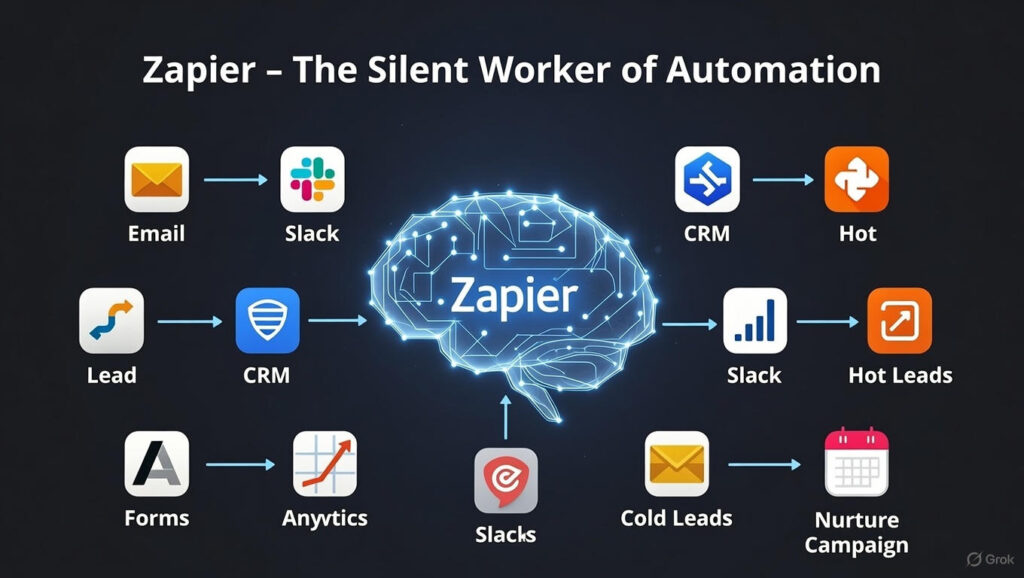
1. Zapier – The Silent Worker of Automation
If you think about backbone to AI automation, that is Zapier. One of the best AI automation tool
Zapier can connects thousands of apps and talk to each other without a single line of code. With Simple AI steps, logic paths, and filters, Zapier now feels like a lightweight automation brain.
Why is it powerful?
- Connects 6,000+ apps,
- Handles multi-step workflows with conditions
- AI-powered actions for content, summarization and routing
Real world example
A marketing team receives leads from a landing page → enriches them using AI → scores them → sends hot leads to Slack → pushes cold leads into a nurture email flow. No human touch. No delay.
Zapier doesn’t scream. It just runs the business quietly.
2. Make (Formerly Integromat) – For People Who Want Control
Make is what power users graduate to when Zapier feels too polite.
It’s visual, flexible, and lets you build deeply customized automation flows. If Zapier is Lego, Make is a full workshop with tools on the wall.
Why it’s powerful
- Visual flow builder with branching logic
- Excellent API handling
- Strong error management (huge for production workflows)
Real-world example
An eCommerce brand automatically syncs orders, inventory, invoices, and customer notifications across five platforms—while handling edge cases like refunds and partial shipments.
Make rewards people who like to think through systems.

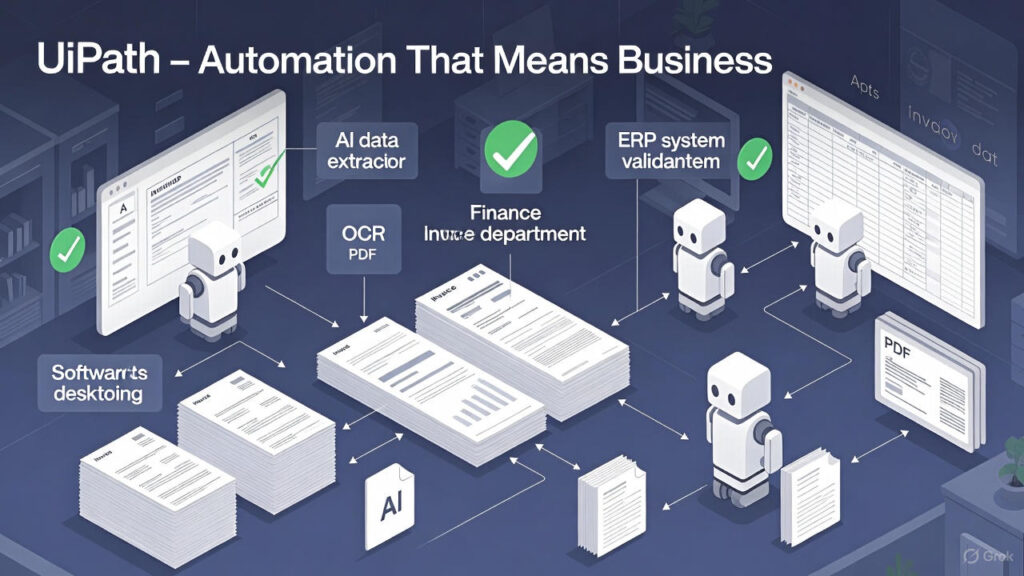
3. UiPath – Enterprise-Grade Automation That Means Business
UiPath plays in a different league.
This is Robotic Process Automation (RPA) for enterprises that still rely on legacy systems, spreadsheets, PDFs, and human-heavy workflows. Banks, hospitals, and governments use UiPath because it works where modern tools can’t.
Why it’s powerful
- Automates repetitive desktop and system tasks
- Strong AI + document understanding
- Massive enterprise adoption and support
Real-world example
A finance department processes thousands of invoices daily—extracting data, validating it, entering it into ERP systems—without humans copy-pasting ever again.
UiPath doesn’t feel flashy. It feels serious.
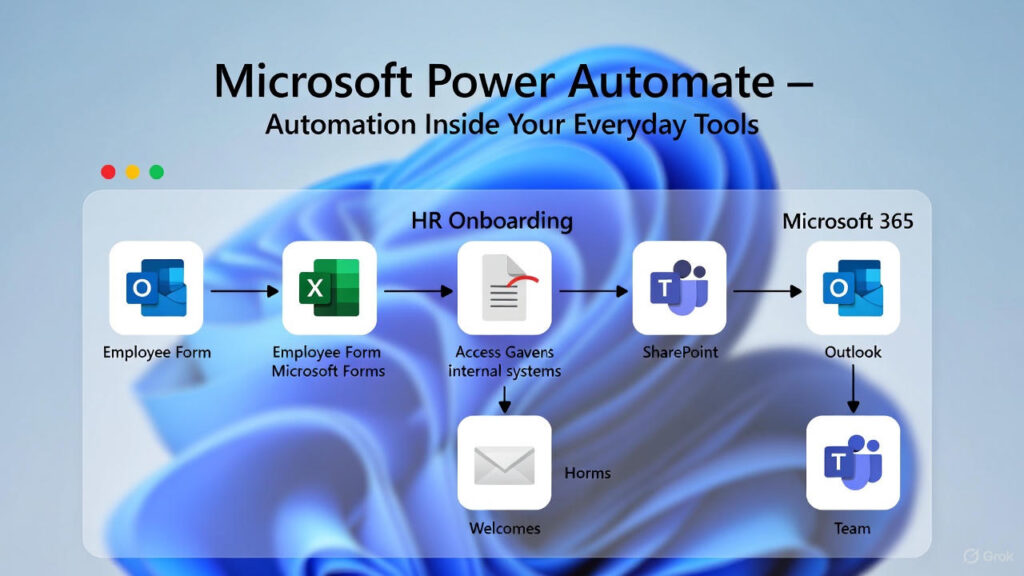
4. Microsoft Power Automate – inside the Microsoft applications
If your organisation is runs on Outlook, Excel, Teams, and SharePoint, Power Automate is already knocking on your door.
This tool shines inside Microsoft-heavy organizations. It’s not trying to compete with everything—it’s optimizing what people already use every day.
Why it’s powerful
- Deep integration with Microsoft 365
- AI Builder for form and document processing
- Enterprise-grade security and compliance by Microsoft
Example:
An HR team automates onboarding: Generated Contracts, signed, stored, access is granted, and welcome emails go out—all triggered by one form submission.
Power Automate feels like automation that fits into your existing habits.
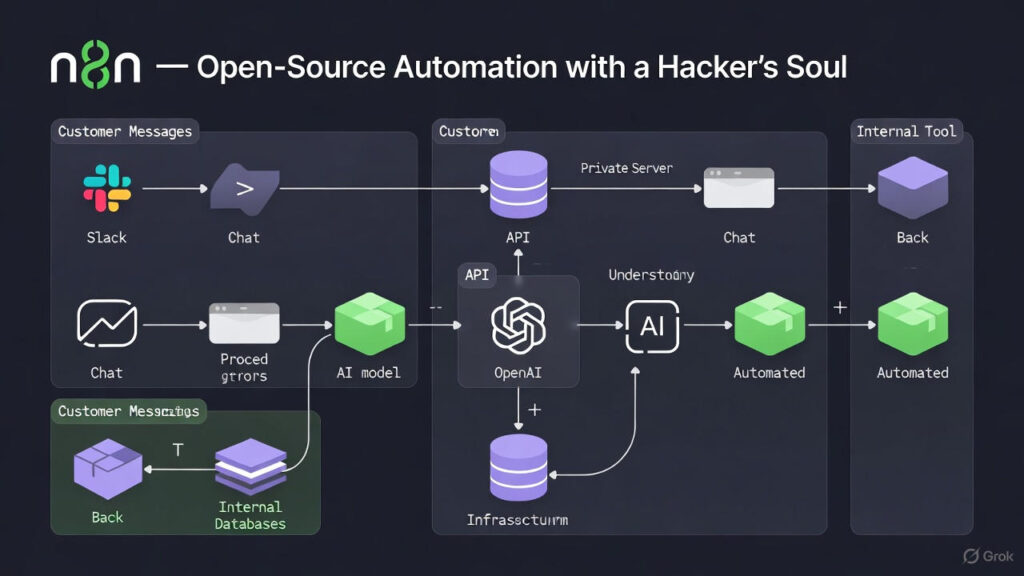
5. n8n – Open-Source Automation with a Hacker’s Soul
n8n is for teams who want ownership.
It’s a powerful open-source, self-hostable, and incredibly flexible platform . No vendor lock-in. No mysterious pricing jumps. Just clean automation logic you control.
Why it’s powerful
- Self-hosted or cloud options
- Strong community support
- Perfect for custom AI workflows
Real-world example
A startup builds an AI-powered customer support system using OpenAI, Slack, databases, and internal tools—without exposing sensitive data to third-party platforms.
n8n feels like freedom with responsibility.
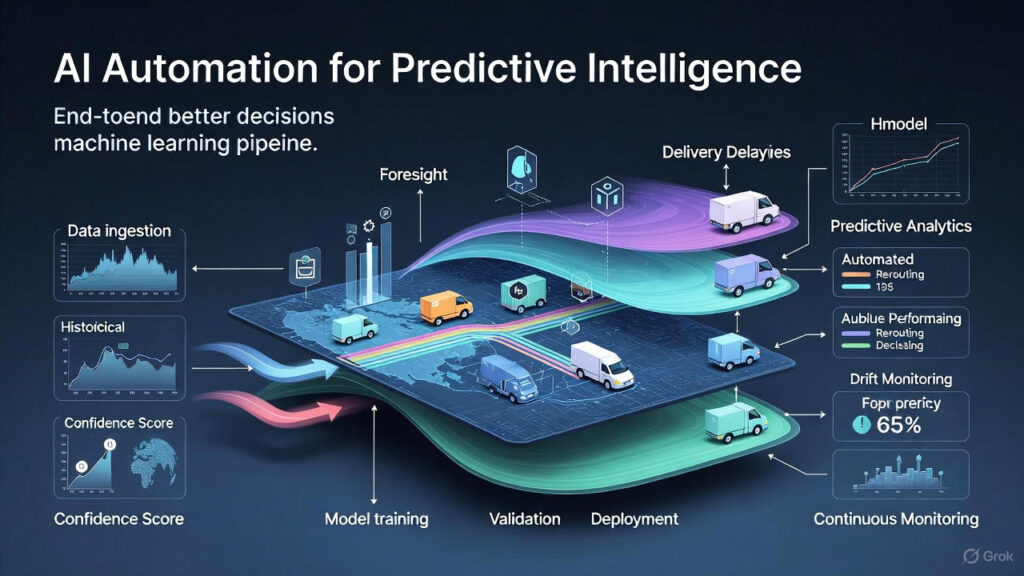
6. Peltarion / DataRobot – AI Automation for Predictive Intelligence
Not all automation is about tasks. Some of it is about decisions.
Tools like DataRobot automate the machine learning lifecycle—training models, testing them, deploying predictions, and monitoring drift.
Why it’s powerful
- Automated ML pipelines
- Predictive insights at scale
- Used by data-driven enterprises
Real-world example
A logistics company predicts delivery delays before it happen and reroutes shipments automatically—saving time, money, and reputation.
This is automation that thinks ahead.
7. OpenAI + Custom Orchestration – The New Automation Frontier
Here’s the truth: the most powerful AI automation systems today aren’t off-the-shelf.
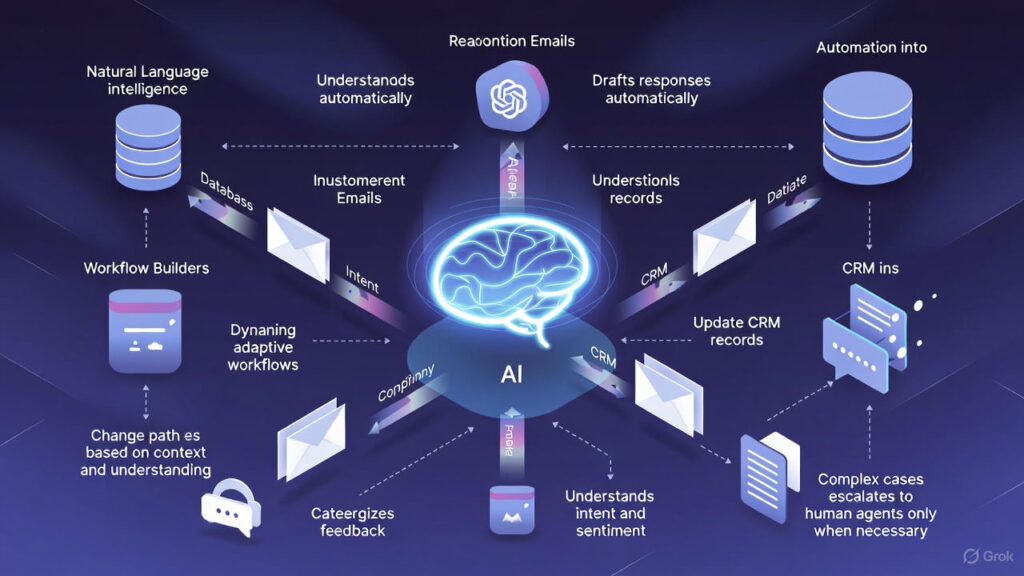
They’re built by combining OpenAI models with tools like Zapier, Make, n8n, and internal databases. This is where automation starts feeling… alive.
Why it’s powerful
- Natural language reasoning
- Content creation, classification, decision-making
- Can be embedded into any workflow
Real-world example
An AI agent reads customer emails, understands intent and sentiment, drafts responses, updates CRM records and customer feedback and escalates only when needed—24/7.
This isn’t future tech. It’s happening now.
Final Thought: Tools Don’t Automate. Intent Does.
AI automation isn’t about stacking tools. It’s about understanding friction—where humans lose time, energy, and focus—and gently removing it.
Above 7 Best AI Automation Tools Powering Modern Businesses in present world
The best automations feel invisible.
The best tools feel reliable.
And the best systems let people do better work, not more work.